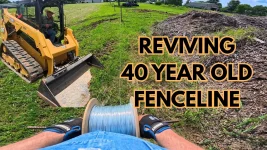
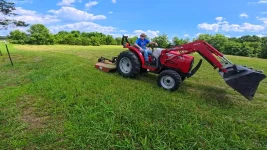
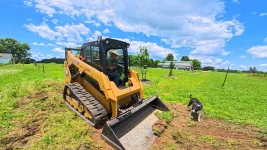
I recently uploaded a video documenting a day of hard work repairing and upgrading our south property fence near the garden to protect our small vineyard and orchard. It’s a DIY electric fence project that involved setting extra posts, stringing seven-strand hotline wire, leveling the ground with a skid steer, and tackling challenges like tangled spools and wet Arkansas soil. The goal was to get at least one hot line up with solar motion activators to secure the area, and despite being winded (and a bit out of shape!), we made progress. You can check out the full process here:
This project got me thinking about how settlers managed fencing in the past without modern tools like skid steers or electric wire. Fencing was critical for early homesteaders to protect crops and livestock from wildlife and wandering animals. Back in the 18th and 19th centuries, settlers used a variety of fencing methods depending on available resources and regional needs. Here’s a quick dive into some historical fencing practices for an educational twist:
In our project, we faced modern challenges like tangled wires and heavy spools, but I can only imagine the backbreaking work of hauling stones or splitting rails by hand. If you’re tackling fencing on your homestead, what methods are you using? Anyone experimenting with traditional techniques like split-rail or wattle? Let’s hear your stories!
Sources:
This project got me thinking about how settlers managed fencing in the past without modern tools like skid steers or electric wire. Fencing was critical for early homesteaders to protect crops and livestock from wildlife and wandering animals. Back in the 18th and 19th centuries, settlers used a variety of fencing methods depending on available resources and regional needs. Here’s a quick dive into some historical fencing practices for an educational twist:
- Split-Rail Fences: Common in early America, especially in wooded areas like the Northeast and Midwest, settlers used split-rail fences made from logs split into rails and stacked in a zigzag pattern (often called a “worm” or “snake” fence). These required no nails or hardware, making them ideal for resource-scarce homesteads. They were sturdy, easy to repair, and could be moved if needed. According to historical records, a skilled worker could split 100-150 rails a day using a maul and wedge.
- Stone Walls: In rocky regions like New England, settlers cleared fields of stones and used them to build dry-stone walls. These fences were durable and required minimal maintenance, though they were labor-intensive. Stone walls often marked property boundaries and are still visible today in rural areas. A 1775 journal entry from a Massachusetts farmer noted spending weeks hauling stones to enclose a pasture for cattle.
- Hedge Fences: In the Midwest, particularly in the 19th century, settlers planted thorny Osage orange trees to create living fences. These dense, prickly hedges were livestock-proof once mature and served as natural windbreaks. By the 1850s, Osage orange hedges were so popular that they were promoted as “living fences” in agricultural journals.
- Wattle Fences: In areas with abundant small trees or branches, settlers wove flexible branches (like willow) between upright stakes to create wattle fences. These were quick to build and used for garden enclosures or temporary livestock pens. Archaeological evidence from colonial sites shows wattle fencing around early vegetable plots.
In our project, we faced modern challenges like tangled wires and heavy spools, but I can only imagine the backbreaking work of hauling stones or splitting rails by hand. If you’re tackling fencing on your homestead, what methods are you using? Anyone experimenting with traditional techniques like split-rail or wattle? Let’s hear your stories!
Sources:
- Hart, John Fraser. The Rural Landscape. Johns Hopkins University Press, 1998. (For split-rail and stone wall fencing practices)
- Anderson, Virginia DeJohn. Creatures of Empire: How Domestic Animals Transformed Early America. Oxford University Press, 2004. (For livestock fencing needs)
- McMurry, Sally. From Sugar Camps to Dairy Farms: A Rural History of the United States. Penn State University Press, 1988. (For Osage orange hedge fences)
- Logsdon, Gene. The Last of the Husbandmen: A Novel of Farming Life. Ohio University Press, 2008. (For wattle fencing references)
- The video link is included for community members to watch the full DIY process.
- Historical data is sourced from reputable books on rural American history to ensure accuracy.
- Feel free to share your own fencing projects or historical insights below!