


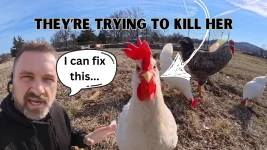
In this video we try and get the injured bird to be closer to the flock. We modify the chicken tractor to allow separation while reintroducing the injured bird to the flock. This also might work as a way to introduce the incoming chicks to the flock, since our chicken tractor has 2 doors and ways to keep the birds together, without allowing them to fight.
They always say chickens have a strict pecking order—but sometimes, that order turns into outright conflict, especially when one bird is injured. I’ve been dealing with exactly that: an injured hen that needed a little TLC, plus the challenge of getting her reintroduced to a flock that wasn’t exactly thrilled to see her back. I tried to keep her inside at night so she’d heal faster, but chickens make messes like you wouldn’t believe. It was time to move her outside—to her own secure corner of the run—where she could watch and be watched by her flock without getting attacked.
A big factor in chicken bickering is sudden change. When you remove a bird for too long, the rest of the flock tends to forget her or see her as a stranger. Historically, folks solved this by using a small “isolation pen” attached to the main coop. Old-timers knew it was crucial to keep the injured bird close enough to remain familiar to the flock but separated so she could heal in peace. I cut a hole in a plastic bin to make a little hen hut inside the run. Not exactly fancy carpentry, but it keeps her dry, comfortable, and safe from peck-happy coop mates.
You’d be surprised how much a chicken’s social memory depends on close physical proximity. Back in the day, many backyard chicken keepers would keep an injured bird in a “chicken hospital” box—a small wooden crate lined with straw—right next to the coop. They’d treat injuries with homemade salves or natural remedies like a comfrey compress. Comfrey is said to promote healing, and many older farmers swore by it instead of chemical-laden ointments. Of course, if you see signs of severe infection, that’s when professional veterinary advice can come in handy.
Another traditional approach to preventing flock squabbles was to ensure plenty of space, roosts, and distractions—because boredom can lead to bullying. Early homesteaders often gave their chickens free range during the day, which cut down on coop quarrels. If space is tight, consider adding perches at various heights or hanging treats (like cabbage heads or bundles of leafy greens) to keep bored birds busy pecking at something other than each other.
Water and feed stations matter, too. I use two separate feeders and waterers so that the low-ranking hens aren’t driven away from food. Historically, farmers would put out multiple scattering points for feed, throwing scratch grains in different areas of the yard so the more aggressive birds couldn’t hog it all. Some would also sprinkle crushed oyster shells or coarse sand in multiple locations for added enrichment. This helped keep everyone calm and prevented the bigger bully birds from patrolling one single feeder.
When it comes to reintroducing an injured chicken, patience is the name of the game. Short supervised mingling sessions can help reestablish her place in the pecking order without allowing serious fights. If any hen or rooster starts trouble, old-time keepers might lightly mist them with water or distract the flock with a treat. The goal is to break the cycle of aggression and remind the birds there’s enough space and resources for everyone.
One extra tip I’ve read from older poultry-keeping manuals: if your hen suffers minor injuries when rejoining the flock, Blu-Kote (a gentian violet antiseptic) can hide bloody spots, which discourages other chickens from continuing to peck. Historically, some folks tried homemade coloring solutions (like mixing food coloring into mild wound salves) for the same reason, though modern Blu-Kote is more convenient if you’re comfortable using it.
As always, a sturdy, weatherproof coop is a must—especially for an injured or low-ranking chicken that might need a quiet, stress-free place to rest. Double-check that you don’t have predators sneaking in at night or gaps in the fencing where your more skittish or curious birds can escape. An electric fence or secure pen is a timeless solution that’s been adapted into modern technology, but the concept of protected “boundaries” to deter both predators and overly feisty flock mates is as old as poultry-keeping itself.
Ultimately, I’m hoping my make-do “hen haven” will keep my convalescing bird safe while letting her reconnect with her flock. It’s a humble old-school trick—separate but nearby—that has worked for centuries. When she’s ready, I’ll open the barrier a bit longer each day until she’s fully back to roost with the others. In the meantime, she can heal outdoors, away from my couches and carpets (and the inside smell).
They always say chickens have a strict pecking order—but sometimes, that order turns into outright conflict, especially when one bird is injured. I’ve been dealing with exactly that: an injured hen that needed a little TLC, plus the challenge of getting her reintroduced to a flock that wasn’t exactly thrilled to see her back. I tried to keep her inside at night so she’d heal faster, but chickens make messes like you wouldn’t believe. It was time to move her outside—to her own secure corner of the run—where she could watch and be watched by her flock without getting attacked.
A big factor in chicken bickering is sudden change. When you remove a bird for too long, the rest of the flock tends to forget her or see her as a stranger. Historically, folks solved this by using a small “isolation pen” attached to the main coop. Old-timers knew it was crucial to keep the injured bird close enough to remain familiar to the flock but separated so she could heal in peace. I cut a hole in a plastic bin to make a little hen hut inside the run. Not exactly fancy carpentry, but it keeps her dry, comfortable, and safe from peck-happy coop mates.
You’d be surprised how much a chicken’s social memory depends on close physical proximity. Back in the day, many backyard chicken keepers would keep an injured bird in a “chicken hospital” box—a small wooden crate lined with straw—right next to the coop. They’d treat injuries with homemade salves or natural remedies like a comfrey compress. Comfrey is said to promote healing, and many older farmers swore by it instead of chemical-laden ointments. Of course, if you see signs of severe infection, that’s when professional veterinary advice can come in handy.
Another traditional approach to preventing flock squabbles was to ensure plenty of space, roosts, and distractions—because boredom can lead to bullying. Early homesteaders often gave their chickens free range during the day, which cut down on coop quarrels. If space is tight, consider adding perches at various heights or hanging treats (like cabbage heads or bundles of leafy greens) to keep bored birds busy pecking at something other than each other.
Water and feed stations matter, too. I use two separate feeders and waterers so that the low-ranking hens aren’t driven away from food. Historically, farmers would put out multiple scattering points for feed, throwing scratch grains in different areas of the yard so the more aggressive birds couldn’t hog it all. Some would also sprinkle crushed oyster shells or coarse sand in multiple locations for added enrichment. This helped keep everyone calm and prevented the bigger bully birds from patrolling one single feeder.
When it comes to reintroducing an injured chicken, patience is the name of the game. Short supervised mingling sessions can help reestablish her place in the pecking order without allowing serious fights. If any hen or rooster starts trouble, old-time keepers might lightly mist them with water or distract the flock with a treat. The goal is to break the cycle of aggression and remind the birds there’s enough space and resources for everyone.
One extra tip I’ve read from older poultry-keeping manuals: if your hen suffers minor injuries when rejoining the flock, Blu-Kote (a gentian violet antiseptic) can hide bloody spots, which discourages other chickens from continuing to peck. Historically, some folks tried homemade coloring solutions (like mixing food coloring into mild wound salves) for the same reason, though modern Blu-Kote is more convenient if you’re comfortable using it.
As always, a sturdy, weatherproof coop is a must—especially for an injured or low-ranking chicken that might need a quiet, stress-free place to rest. Double-check that you don’t have predators sneaking in at night or gaps in the fencing where your more skittish or curious birds can escape. An electric fence or secure pen is a timeless solution that’s been adapted into modern technology, but the concept of protected “boundaries” to deter both predators and overly feisty flock mates is as old as poultry-keeping itself.
Ultimately, I’m hoping my make-do “hen haven” will keep my convalescing bird safe while letting her reconnect with her flock. It’s a humble old-school trick—separate but nearby—that has worked for centuries. When she’s ready, I’ll open the barrier a bit longer each day until she’s fully back to roost with the others. In the meantime, she can heal outdoors, away from my couches and carpets (and the inside smell).
Attachments
Last edited: